Guideline Central (Legacy)
- 3.5
- Rating
- 50.00K
- Installs
- Free
- Price

 Analysis by App-foxy
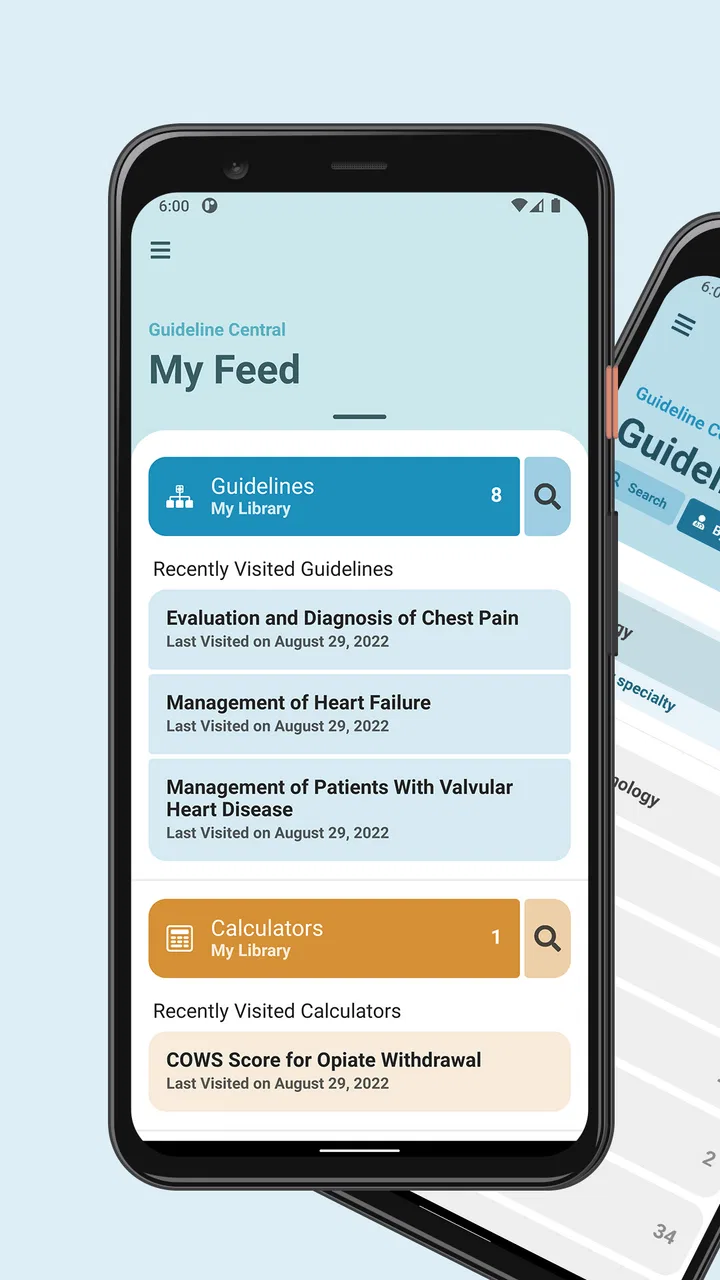
I approached Guideline Central (Legacy) as a quick-reference medical app rather than as a replacement for a textbook, clinical database, or professional judgment. That distinction matters from the first minute. The app is built around medical guidelines, calculators, and related reference material in a concise format, so its value depends less on long reading sessions and more on how quickly I can reach the right piece of information when I already know what I am looking for.
That focus makes it potentially useful for students, clinicians, healthcare workers, and anyone who regularly needs compact medical references. It also creates a few points of friction. A short reference is only helpful when the relevant topic is easy to locate, the user understands the surrounding clinical context, and the information is treated as a support tool rather than an automatic answer. In my experience, the app works best when I use it deliberately, with a clear question in mind.
Finding the right reference without losing time
The first challenge is not necessarily installation. It is knowing how to approach a library that compresses complex medical guidance into a quick-reference format. If I open it without a specific task, I can easily fall into broad browsing and spend more time deciding what to inspect than learning anything useful. I get better results when I begin with a defined need: checking a calculation, reviewing a recommendation category, or refreshing my memory before discussing a topic with a colleague.
You May Also Like

 Blood Strike: 2.5 Anniversary
Blood Strike’s Loadouts Turn Every Drop Into a Tactical Gamble
A close look at Blood Strike’s custom loadouts: how fast access to signature weapons reshapes its battle royale rhythm, rewards preparation, and narrows the gap between fights.

 Pandora - Music & Podcasts
Pandora’s Music Is Easy to Start, but Harder to Recover
Pandora’s strength is its low-effort path from a seed to a station. Its weak spot is how much confidence it asks you to place in connection, setup, and quiet recovery.

 8 Ball Pool
 Is Built on Rivalries, Rematches, and Routine
A close look at the rivalries, rematches, shared routines, and unanswered safety questions that turn a quick pool match into a persistent mobile community.

 Samsung Music
’s Quiet Strength Is Playing What You Already Own
Its reach comes less from spectacle than from dependable access to a personal library. That simplicity is both the app’s strongest retention engine and its ceiling.

 AccuWeather: Weather Radar
AccuWeather Review: A Quick, Clear Forecast for Everyday Decisions
For everyday plans, the best forecast is the one you can understand quickly. AccuWeather makes rain timing, radar, and local conditions easy to act on, with a few trade-offs.

 Hill Climb Racing
Why Hill Climb Racing Still Turns Crashes Into One More Run
A tiny car, a bumpy hill and one more upgrade: Hill Climb Racing keeps resurfacing because its simple chaos makes every near-miss feel personal.
More From Our News Desk
View All News


This is an important difference from a general search engine. A web search may return a wide mixture of hospital pages, educational articles, commercial content, and outdated summaries. Guideline Central (Legacy) is more focused on medical reference work, but that does not mean every screen will explain a subject from the beginning. The concise design is an advantage for someone who already understands the vocabulary. For a beginner, it may feel abrupt because a compact recommendation can require background knowledge to interpret safely.
I would therefore avoid treating the app as a complete learning course. It is more suitable for checking a familiar subject than for building a first understanding of a complicated condition. When I need definitions, mechanisms, differential considerations, or a detailed explanation of why a recommendation exists, I prefer a full educational source. When I need a compact reminder after studying the subject, this app becomes more practical.
Another likely sticking point is deciding whether a reference is relevant to the exact situation in front of me. Medical guidance often depends on patient characteristics, timing, comorbidities, local practice, and the purpose of the decision. A calculator or concise guideline summary can organize information, but it cannot remove the need to verify inputs and apply professional judgment. I treat every result as a prompt for checking, not as permission to act automatically.
What I check before relying on a result
My most useful habit is to pause before entering numbers into a calculator. I first identify what each input represents, what unit it expects, and whether the patient information is current. A wrong unit or an estimate substituted for a measured value can produce a neat-looking result that is still unsuitable for the situation. This is one of the less obvious trade-offs of calculator tools: they reduce arithmetic effort, but they can make input mistakes feel more authoritative.
I also read the surrounding labels instead of copying the final output immediately. If the app presents a concise recommendation, I look for the population or context to which it applies. I write down the result only after confirming that I have selected the intended tool. This workflow is slower than tapping through screens as quickly as possible, but it is much safer and more repeatable.
For students, I recommend using the app after working through a problem independently. Solve the calculation on paper or in your head first, then use the app to compare the result. That turns it into a learning check rather than a shortcut. If the two answers differ, the disagreement becomes useful: it may reveal a unit error, a rounding difference, or a misunderstanding of the formula.
For professionals, the same method helps when the app is being used during a busy shift. I keep the original clinical question visible in my mind, enter only verified information, and record the result together with the context. A bare number is easy to misread later. A number connected to the reason it was calculated is much easier to audit.
Setup checks that prevent avoidable frustration
Guideline Central (Legacy) is a free medical app from Guideline Central, and it is intended for everyone from an age-rating perspective. The free entry point is helpful for trying the reference experience without committing immediately. At the same time, some individual items can involve in-app purchases ranging from about five dollars to nearly two hundred dollars each. I would not assume that every reference area follows the same access arrangement, so I would check the purchase screen carefully before confirming anything.
That pricing range is especially important for anyone installing the app for occasional personal use. A person who only wants a quick look at one topic may find a free section sufficient, while someone building a larger professional reference collection may encounter a very different total cost. I would decide what I actually need before browsing optional material. This avoids paying for a broad package when a single, targeted resource would be enough.
The app has been available since May 31, 2013, and the current version is 6.1.1. It supports devices running Android 5.0 or later. Those details make compatibility straightforward for many Android users, but an older supported operating system does not guarantee that every device will deliver the same experience. Screen size, system settings, available storage, and connection quality can still affect installation and loading.
When setup feels stuck, I begin with simple checks rather than assuming the medical content is unavailable. I confirm that the device meets the minimum operating-system requirement, that the app has finished installing, and that the device has enough free space for normal operation. I then close and reopen the app before trying repeated downloads or purchases. Repeating the same failed tap rarely solves a temporary store or network problem.
I also make sure I am using the intended account if a purchase or previously accessed reference is involved. Switching accounts can make content appear missing even when the transaction was made successfully elsewhere. I avoid buying the same item again until I have checked the account and allowed the app time to refresh. This is a small but valuable recovery step because purchase confusion can become more expensive than the original technical problem.
Connection quality deserves attention too. A quick-reference app may feel lightweight once content is available, but an initial load or update can still depend on a stable connection. If a screen remains incomplete, I try again on a reliable network and wait for the page to finish before closing the app. I do not interpret a temporary loading problem as evidence that the guideline itself is absent.
Recovering a workflow after a failed screen
When I lose my place, I avoid restarting the entire task from memory. Instead, I reconstruct the workflow in small steps: identify the subject, reopen the relevant reference, confirm the selected tool, and re-enter only the information I can verify. This is more reliable than guessing which button I pressed previously, especially when a calculator and a guideline section sit close together in the same reference environment.
A useful personal practice is to keep a short note of the task before opening the app. For example, I might write “check the appropriate calculation for this documented measurement” rather than simply opening the app with no plan. If the session is interrupted, that note tells me what I was doing and what still needs confirmation. It also reduces the chance of selecting a similar-looking topic by mistake.
If the app closes or a page fails to load, I first reopen it and repeat the last clear step. I do not immediately enter new patient information or make a decision based on a partial screen. If the same issue continues, I check the connection, restart the device, and confirm that the app is updated to version 6.1.1. These are ordinary troubleshooting actions, but they are appropriate because they do not require guessing about hidden settings or changing medical inputs.
For a calculation, I keep an independent check available. That might be the formula in a trusted educational reference, a local clinical resource, or a second calculation performed carefully. I am not using the second source to create confusion; I am using it to detect an obvious mismatch. If the result differs, I stop and investigate the inputs and method instead of choosing whichever number looks more convenient.
This recovery approach also helps with interruptions during real work. Imagine I am preparing for a discussion and need to refresh a guideline-based threshold or run a calculation. A notification pulls me away, and when I return I am no longer sure whether I selected the right reference. Rather than trusting the last visible number, I begin again from the clinical question. That costs a little time, but it protects against carrying a result from the wrong screen into a serious conversation.
Separating app trouble from content and context
Not every disappointing answer is an application failure. Sometimes the issue is that the question is broader than a concise reference can answer. If I am looking for a complete treatment plan, a nuanced interpretation, or a patient-specific decision, a quick-reference app may seem unhelpful simply because the task requires a fuller source. In that situation, changing apps will not solve the underlying need unless I move to a more comprehensive clinical database or educational text.
The same applies when a recommendation appears different from what I learned elsewhere. I first check whether the sources address the same population, setting, terminology, and version of a guideline. Medical guidance can be sensitive to context, and a short summary may emphasize a particular decision point rather than reproduce every qualification. I do not assume that a difference automatically means the app is broken.
Users should also remember that the app is not a substitute for consultation or professional evaluation. Its Everyone age rating describes general content suitability, not clinical competence. A curious reader can use it to understand medical topics, but should not treat that rating as an endorsement for self-diagnosis or self-treatment. For urgent symptoms or personal treatment decisions, a qualified healthcare professional remains the appropriate source of advice.
This is where the app compares unevenly with familiar alternatives. Search engines are faster for broad questions and often provide more explanatory context, but they demand more effort to judge source quality. Large medical databases can offer deeper coverage and stronger navigation for specialists, yet they may be more expensive or slower for a single quick check. Printed pocket references are dependable when offline and easy to annotate, but they can become outdated and do not provide calculator convenience.
Guideline Central (Legacy) occupies the middle ground. Its concise format is more focused than an ordinary web search, while its quick-reference approach is less expansive than a full clinical information system. I like that position when I already know the subject and need a compact reminder. I would choose a broader alternative when I need extensive explanation, primary literature, detailed citations, or a complete patient-management pathway.
Who will get the most from this reference app?
I see the strongest fit among medical students reviewing familiar material, healthcare professionals who want a compact reference during preparation, and users who frequently move between guideline summaries and calculators. The app can reduce the friction of switching between unrelated sources, especially when the task is narrow and time-sensitive. It is also useful for building a personal checking routine: define the question, select the relevant reference, verify inputs, and compare the result with the clinical context.
It is less suitable for someone who wants a polished, beginner-friendly course or a single source for every medical question. The concise style may leave too much interpretation to the reader. It is also not the right choice for a person seeking a diagnosis, an emergency answer, or individualized treatment instructions without professional involvement. In those cases, the limitation is not merely technical; the format itself is not designed to carry that responsibility.
The app has more than fifty thousand installs and an average rating of about three and a half stars from roughly four hundred ratings. I read that as a sign of a useful but not universally smooth experience. The audience is large enough to show that the concept has practical appeal, while the middling score suggests that navigation, access, content expectations, or device-specific behavior may not work equally well for everyone. I would try the free portion first and judge it against my own workflow.
One practical tip is to evaluate it using a real but low-stakes study task rather than a random browse. Choose a topic you already understand, locate the relevant reference, try one calculator if appropriate, and see whether the presentation helps you work faster without making you less careful. This test reveals more than a quick glance at the opening screen. If the app feels natural during that exercise, it is more likely to earn a place in regular use.
Another tip is to separate reference discovery from final decision-making. I use the app to locate a guideline or organize a calculation, then I confirm that the source applies to the situation. This two-stage workflow is particularly important when a concise result looks definitive. The app is strongest as a structured checkpoint, not as an authority that eliminates the need to think.
My final view is positive but measured. Guideline Central (Legacy) gives medical reference work a compact shape, and I appreciate it most when I have a precise question, familiar terminology, and a need for a quick check. Its free price makes experimentation easy, although the possible in-app purchase range means I would inspect each item before spending money. Setup and recovery are manageable when I use ordinary compatibility, connection, account, and restart checks.
The best reason to use it is disciplined speed: it can shorten the path to a relevant guideline or calculation without pretending that clinical judgment is optional. If that is what you need, I think it is worth testing. If you need deep explanations, comprehensive evidence review, or personal medical advice, I would choose a fuller source and treat this app as a supporting reference rather than the center of the workflow.
FAQs for Guideline Central (Legacy)
01What is Guideline Central (Legacy) used for?
Guideline Central (Legacy) is designed to help healthcare professionals access clinical guidelines, medical recommendations, and related reference content in a more convenient format. After reviewing the app, its main value is quick access to organized information that can support point-of-care research, education, and professional decision-making. It should be treated as a reference tool, not a replacement for clinical judgment or individualized medical advice.
02Who can benefit from using Guideline Central (Legacy)?
The app is primarily useful for physicians, nurses, pharmacists, allied health professionals, students, and other people who regularly consult evidence-based clinical guidance. It may also be helpful for healthcare organizations and educators. However, the usefulness of specific content can depend on the user’s specialty, subscription access, and the guidelines available through the legacy platform, so users should check whether their required topics are included before downloading.
03Is Guideline Central (Legacy) free to download and use?
Downloading an app does not necessarily mean that all of its content is free. Guideline Central (Legacy) may provide access to some features or introductory material without charge, while selected guidelines, tools, or professional resources can require registration, a subscription, institutional access, or an individual purchase. Before relying on it, review the current pricing and access conditions shown in the relevant Android or iOS store.
04Can Guideline Central (Legacy) be used as a substitute for a doctor or official medical advice?
No. Guideline Central (Legacy) is a clinical reference application and should not be used to diagnose a condition, prescribe treatment, or make urgent health decisions without professional evaluation. Guidelines may not reflect every patient’s circumstances, and recommendations can change over time. Patients should consult a qualified healthcare professional, while clinicians should verify important information against current official sources and their own professional judgment.
05What should I know about the “Legacy” version before installing it?
The “Legacy” label suggests that this edition may be an older or transitional version of the Guideline Central experience. Users could encounter differences in design, update frequency, compatibility, login behavior, or available content compared with a newer official application. Before installing, check the store listing, developer information, last update date, device requirements, and whether your account or subscription is supported by this specific legacy release.
Pros
- Quick access to clinical guidelines and medical reference content.
- Useful for healthcare professionals needing information on the go.
- Search tools help locate specific guideline topics efficiently.
- Content is organized for easier browsing across medical specialties.
- Can support point-of-care research when internet access is available.
Cons
- Some guideline content may require a paid subscription or account.
- The legacy interface feels dated compared with newer medical apps.
- Information should not replace professional judgment or local protocols.
- Updates may be less frequent than in the current Guideline Central app.
- Large documents can take time to load on slower mobile connections.

Guideline Central (Legacy)
Gallery